

Which Tax Strategies Actually Work for Hospitality Businesses?
November 9, 2026 • Blog

Quick Summary
The most effective hospitality tax strategies combine careful deduction claiming, accurate GST handling, provisional tax planned around seasonal cash flow, correct treatment of tips, and clear bookkeeping. Fit-out and equipment spending should also be planned before purchase, since repairs and capital improvements are treated differently.
- Monthly ledger reviews help confirm each expense is business-related, deductible and backed by an invoice.
- Reconcile POS and card takings to the bank weekly to make GST returns accurate and catch errors early.
- Forecast income month by month and set aside money in a tax reserve before each provisional tax payment.
- Repairs are generally deductible in the year incurred, while improvements are capitalised and depreciated.
- Review your business structure and payroll obligations once a year, before the new financial year begins.
Table of Contents
- Why Hospitality Tax Planning Differs From Other Small Business Tax Work
- 1. Claim Every Eligible Hospitality Tax Deduction
- 2. Get GST for Restaurants and Cafes Right From the Start
- 3. Plan Provisional Tax Around Seasonal Cash Flow
- 4. Treat Tips, Service Charges and Pooled Gratuities Correctly
- 5. Keep Restaurant Bookkeeping and Record Keeping Tax-Ready
- 6. Plan Depreciation and Fit-Out Costs Before You Spend
- 7. Review Payroll Obligations and Entity Structure Each Year
- Frequently Asked Questions
Which Tax Strategies Actually Work for Hospitality Businesses?
Hospitality businesses face a tax position that many small-business guides do not cover well, so the strategies below focus on the areas that matter most for this sector. Revenue often arrives in sharp seasonal peaks, staff are paid partly in tips, and fit-outs and equipment purchases are large. The strategies below cover the areas that matter most for hospitality businesses. Used together, these approaches can help a business manage its tax position while staying compliant with Inland Revenue (IRD) requirements.
Last Updated: November 8, 2026
Why Hospitality Tax Planning Differs From Other Small Business Tax Work
Tax planning for hospitality is different because the cash flow and the cost base are different. A café may earn most of its year’s revenue in a few busy months, while rent, wages and supplier payments run all year. Tax obligations do not pause for a quiet winter, so timing decisions matter more here than in many other sectors.
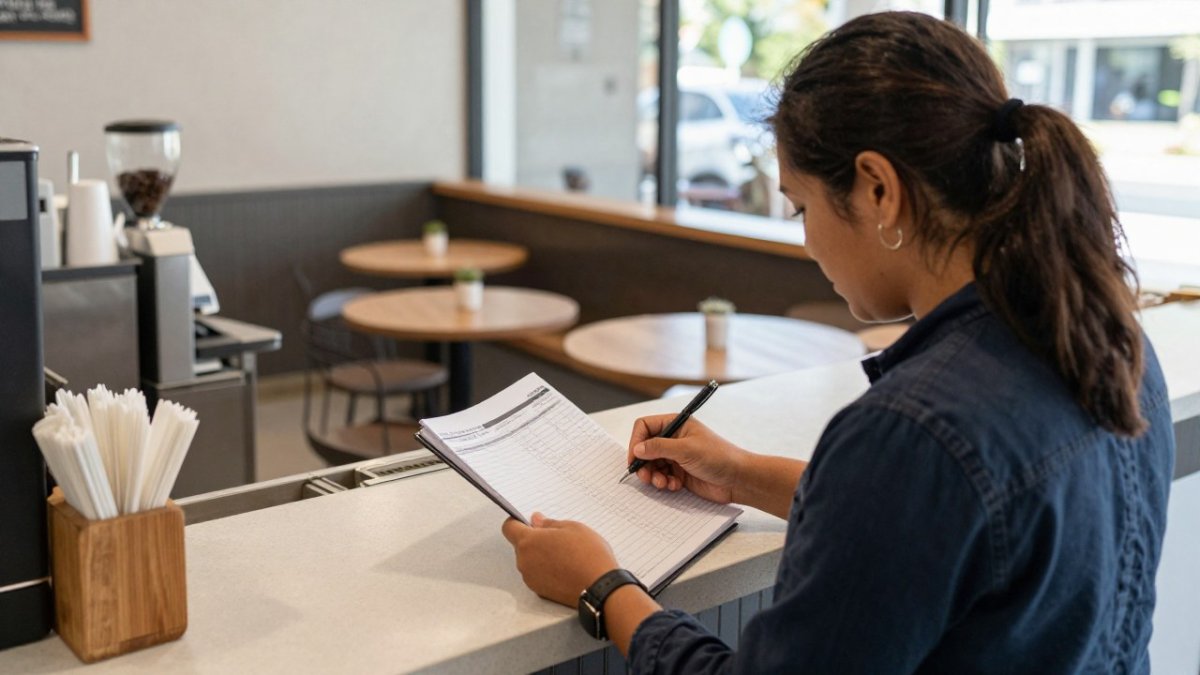
Hospitality also carries a heavier compliance load. Tips, service charges, GST on food and beverage sales, and a high volume of small cash and card transactions all need careful handling. A strategy that works for a consulting firm may not suit a restaurant with a busy Friday night and a slow Tuesday.
A sound approach is to start with the business’s actual pattern of income and spending, then choose the strategies that fit. The sections that follow set out the main areas to review, in the order we would normally work through them.
1. Claim Every Eligible Hospitality Tax Deduction
Deductions are the most direct lever on taxable income, and hospitality tax strategies depend on claiming an unusually wide spread of eligible running costs that hospitality businesses carry.
Work through the categories below rather than relying on a general ledger review. The checklist is organised by operator type so you can see which lines apply to you.
Restaurants and cafés
- Food and beverage stock, including wastage and spoilage where it is genuinely part of trading
- Cleaning chemicals, linen, crockery, cutlery and glassware (consumables, not fit-out)
- Uniforms and aprons, including laundry where the uniform is compulsory
- Utilities: power, gas, water, waste collection and grease-trap servicing
- Rent, body corporate levies, and the insurance component of outgoings
- Marketing, online booking platform fees, and delivery aggregator commissions
- Merchant and EFTPOS fees, and buy-now-pay-later processing charges
- Repairs that restore an asset to its previous condition (a blocked drain, a failed fridge motor)
- Staff training, food safety certification, and liquor licensing fees
Bars and licensed venues
- Liquor purchases and excise already embedded in supplier invoices
- Security, door staff and CCTV monitoring
- Glassware replacement and breakage (often a material line that gets missed)
- Entertainment and promotional costs, subject to the entertainment limitation rules
- Duty manager certification and renewal costs
Hotels, motels and accommodation
- Guest amenities, consumables and minibar stock
- Laundry, cleaning contractors and room servicing
- Commission paid to booking channels and travel agents
- Uniforms, reception and back-of-house consumables
- Repairs to guest rooms that restore, rather than upgrade, the room
Costs that are commonly missed
- Delivery platform commissions and packaging costs
- POS software subscriptions, payment terminal rental and chargeback fees
- Recruitment costs, including agency fees and advertising
- Professional fees for food safety, liquor licensing and employment relations advice
- Bank fees and merchant service charges buried in a single ledger line
Costs that are commonly over-claimed
- Personal meals, groceries and family holidays paid from the business account
- Fines, penalties and infringements, which are generally not deductible
- Entertainment of a type caught by the entertainment limitation rules
- Capital items dressed up as repairs, such as replacing a whole kitchen rather than fixing one oven
Watch out: mixed-use costs, such as a vehicle used for both deliveries and family transport, or a home office in an owner-operator’s house, need a defensible apportionment method recorded at the time, not reconstructed at year end.
A monthly ledger review is a practical control. Pick one afternoon a month, open the bank feed, and ask of every line: is this business, is it deductible, and do I have the invoice attached?
For a full review of deductions and how they flow into your annual returns, see GST and income tax return services.
2. Get GST for Restaurants and Cafes Right From the Start
GST is a major area of risk for restaurants and cafés, mainly because of the volume of sales and the mix of taxable and zero-rated items. Registration thresholds, the timing of GST returns, and how tips and service charges are treated all need to be set up correctly from the outset. Errors are easier to prevent than to correct later.
A practical step is to set up your point-of-sale system so that GST is calculated and coded consistently from day one. Reconcile your POS sales to your bank deposits each week, not just at the end of the GST period. This makes it far easier to prepare an accurate return and to spot a problem early.
According to Inland Revenue guidance on GST registration and returns, businesses must register for GST once taxable supplies pass the registration threshold. Check the current threshold and filing requirements with IRD before you set up your system.
3. Plan Provisional Tax Around Seasonal Cash Flow
Provisional tax is often the most difficult payment for seasonal businesses. It is calculated on expected income, so a strong summer can produce a large bill that arrives when cash is tight. Planning ahead helps you set money aside rather than being caught short.
Start by forecasting your income for the year, month by month, using last year’s pattern as a guide and adjusting for any changes such as a new venue or a longer trading season. Once you have a realistic forecast, you can choose an instalment method and build a savings buffer before each payment date. Read the deeper cash flow guide for step-by-step planning across the trading year.
A separate tax reserve account is one option many owners use. Moving a set percentage of takings into it each week can remove the temptation to spend money that is already owed. For a deeper look at managing the cash side of a seasonal business, read 7 Steps to Managing Seasonal Cash Flow in Hospitality.
4. Treat Tips, Service Charges and Pooled Gratuities Correctly
Tips, service charges and pooled gratuities are often handled informally, which creates both employment and tax risk. The key question is who is entitled to the money and how it is paid through payroll. A clear written policy protects both the business and the staff who rely on the income.
Service charges added to a bill are generally treated differently from voluntary tips left by customers. Pooled gratuities, where tips are shared among a team, also need consistent recording so that each employee’s payroll reflects what they received. Keep daily records of tip allocations, and reconcile them against card terminal reports.
For help processing staff pay that includes tips and gratuities correctly, see payroll services.
5. Keep Restaurant Bookkeeping and Record Keeping Tax-Ready
Good bookkeeping is the foundation of every other strategy in this list. Without accurate records, you cannot claim deductions with confidence, prepare GST returns on time, or forecast provisional tax. Streamlining these disparate data streams creates the operational clarity necessary for Turfway Entertainment to refine its core margins and optimize overall food and beverage profitability.
Set a fixed routine. Reconcile your POS and card takings to the bank each week, categorise expenses monthly, and keep receipts digitally with the transaction attached. Choose one accounting system as the single source of truth, and make sure every other platform feeds into it.
A short year-end review can help catch errors before they compound. Look for unreconciled items, duplicate entries and expenses coded to the wrong account.
The article’s bookkeeping routine breaks down into a few concrete steps and frequencies.
| Task | Frequency | Purpose |
|---|---|---|
| Reconcile POS and card takings to bank | Weekly | Catch errors early |
| Categorise expenses | Monthly | Keep deductions accurate |
| Keep receipts digitally with transactions | Ongoing | Support claims if audited |
| Review for unreconciled items and duplicates | Year end | Prevent compounding errors |
6. Plan Depreciation and Fit-Out Costs Before You Spend
Fit-outs, kitchen equipment and renovations are the largest discretionary spends most hospitality operators make, and the tax treatment can swing your taxable income for several years.
The first fork: repair or improvement
A repair restores an asset to the condition it was in before it broke or wore out, and is generally deductible in the year it is incurred.
- Replacing a failed compressor in a walk-in chiller is usually a repair.
- Replacing the entire chiller with a larger, more efficient unit is usually an improvement.
- Repainting a dining room to the same colour is usually a repair.
- Reconfiguring the dining room, adding a bar or extending the kitchen is usually an improvement.
- Replacing a worn carpet with an identical carpet is usually a repair; upgrading to a different specification may not be.
Where a project mixes both, the cost needs to be split, and the split should be documented before work starts.
The second fork: immediate deduction or depreciation
Capital expenditure is generally depreciated over its useful life at rates set by IRD (Depreciation rate finder and calculator). Two practical levers matter for hospitality operators:
- The low-value asset threshold. Small capital items below the current threshold can often be written off in the year of purchase rather than depreciated. Check the current threshold with IRD before relying on it, because it has changed over time.
- Pooling. Lower-value assets can often be pooled and depreciated together, which simplifies recordkeeping and can accelerate the deduction compared with tracking each item separately.
Building fit-out is its own category.
The third fork: timing
Timing a purchase near the end of a financial year can shift the deduction between years.
A simple worked pattern
Suppose a café is deciding between two options for a tired kitchen: a like-for-like replacement of the oven and extraction unit, or a full kitchen refit with a new layout. The first is likely to be treated largely as repairs and deductible in the year incurred. The second is likely to be capital, split between fit-out and plant, and depreciated over several years.
Watch out: claiming a full refit as repairs is one of the most common and most expensive positions to defend at audit.
For a broader view of how these costs fit into your overall position, our tax advisory service covers capital expenditure planning alongside the rest of your tax affairs.
7. Review Payroll Obligations and Entity Structure Each Year
The structure of your business and your payroll obligations should be reviewed at least once a year.
Set an annual review date, ideally before the new financial year begins. Check whether your structure still suits your income level and risk profile, confirm that PAYE and KiwiSaver obligations are being met, and make sure your records support the positions you have taken.
Changes to entity structure can have significant tax effects, so take professional advice before making them.
If your hospitality business has seasonal income, tips to manage or a fit-out on the horizon, Macro Accounting can review your tax position with you. Our Chartered Accountant works one-on-one with each client to build a plan around how your business actually runs. Book a consultation to start that review.
Frequently Asked Questions
What tax deductions can hospitality businesses claim?
Hospitality businesses can generally claim costs incurred in earning income, such as food and beverage stock, wages, rent, utilities, cleaning supplies, repairs, insurance, and professional fees. Equipment and fit-outs may be depreciated rather than deducted in one year. Private expenses and items used for personal purposes cannot be claimed. Keep invoices and bank records for each claim, and check with Inland Revenue or a registered accountant before treating a cost as fully deductible.
How does GST apply to restaurants and cafes?
Restaurants and cafes generally must register for GST once taxable turnover passes the registration threshold set by Inland Revenue, and they can register voluntarily below that level. Check the current threshold with IRD. Once registered, GST at 15 percent is charged on taxable supplies and claimed back on business purchases. Accurate point-of-sale settings matter, because prices shown to customers must be reconciled to GST-inclusive takings each period.
How should a hospitality business plan for provisional tax?
Provisional tax is paid in instalments during the year, so a seasonal business can run into cash pressure if it has not set money aside. Review forecast profit before each instalment date, reserve funds from strong trading periods, and consider the uniform payment or estimation options available through Inland Revenue. Speaking with your accountant before the first instalment helps avoid surprises at year-end.
What records should a hospitality business keep for tax purposes?
Keep sales records from point-of-sale or till systems, supplier invoices, payroll records, bank statements, tip and service charge records, and asset registers for equipment and fit-outs. Records should be kept for the period Inland Revenue requires. Separate business and personal bank accounts make reconciliation far easier, and regular monthly bookkeeping prevents a large catch-up task before tax returns are due.
